Sobriety Counter Apps vs. AI Companion Apps for Quitting Weed: What's the Difference?
Learn how sobriety counter apps differ from AI companion apps for quitting weed, and why that gap matters most when motivation is lowest.
Contents9 parts · 11 min
- The Counter Goes Mute When You Need It Most
- What a Sobriety Counter App Actually Does Well
- Where a Sobriety Tracker App Stops Being Enough
- What an AI Companion App Does That a Counter Cannot
- The Moment That Matters Most Is the One Counters Miss
- Counter App vs. AI Companion App: A Side-by-Side Look
- Which Tool Fits Where You Actually Are Right Now
- The Counter Is the Start. The Companion Is There for the Hard Part.
- Conclusion
You downloaded the app, watched the counter tick from day one to day two, maybe even made it to day seven. And then, somewhere around 11 p.m. on a Tuesday, the craving hit hard and the app just... sat there. Silent. Showing you a number that suddenly felt meaningless.
That's the quiet problem with most sobriety counter apps. They're great at telling you how far you've come, but they can't show up for you in the moment you need support most.
This post is about understanding that gap. You'll learn exactly what a sobriety counter app does well (and it genuinely does some things well), where it stops being enough, and what a newer category of AI companion apps can do that a simple tracker never could. We'll compare the two categories side by side, and help you figure out which tool actually matches where you are right now in your journey to quit weed.
No judgment here, just clear information to help you build a support setup that works when motivation is lowest and cravings are loudest.
01The Counter Goes Mute When You Need It Most
It's day 9. It's 11 p.m. Everyone you'd normally text is asleep, and the craving isn't.
You open your phone and there it is: your sobriety counter, showing 9 days. That number is real. You earned it. But it just sits there. It doesn't ask how you're doing. It doesn't remember that this specific hour has been the hard one all week. It waits for you to be strong enough to close the app and go to bed.
Sometimes that's enough. Tonight it isn't.
A sobriety counter is a genuinely useful tool. It gives you a number to protect, a streak to respect, and a visual record of real progress. But it's a passive one. It cannot reach back. It cannot speak first. It records what you've done; it plays no role in what happens next.
There's a second category of quit weed app that most people don't know exists yet: an active AI companion built specifically for people walking away from weed, that holds your story across sessions, learns when your hard hours are, and reaches out before those moments arrive. Not a counter with a chatbot bolted on. Something different in kind.
If you're wondering what day-to-day support actually looks like with that kind of tool, the Solenna FAQ is worth reading before you decide what you need.
This piece draws a clear line between those two categories so you can match the right tool to what you're actually trying to do.
02What a Sobriety Counter App Actually Does Well
Before you write off sobriety counter apps entirely, it's worth being clear about what they actually do, and where they genuinely deliver.
A sobriety counter app, at its core, does three things: it records your quit date, tracks how many days you've stayed clean, and often surfaces milestones, money saved, or an urge log you can fill in after a craving passes. That's the whole job. No more, no less.
And for a lot of moments, that job is exactly right. Checking in after a solid week, seeing that your seven-day number flipped to eight, noting what you would have spent on weed, logging a craving you already got through on your own. A sobriety tracker app handles all of that cleanly and without friction.
The day count itself carries real psychological weight. When that number is climbing, resetting it has a concrete cost. That's not nothing. A visible stake in your progress is a legitimate anchor, and the users who find value in that are telling the truth about their experience.
Plenty of people using passive tracking for low-stakes check-ins are getting exactly what they came for.
Still, the category has a defined ceiling. A May 2026 quality assessment in JMIR mHealth and uHealth evaluated four free cannabis cessation apps and found a mean quality score of 3.4 out of 5, rated poor to acceptable. The category exists and is widely used. It's just not built for every moment.
03Where a Sobriety Tracker App Stops Being Enough
But satisfaction with passive tracking has a ceiling, and it shows up quickly when a craving actually hits.
The core problem is that a sobriety counter is reactive. It sits on your home screen and waits. That works fine when you are in a good stretch and want to check your number. It fails at the moment you most need support, because that is exactly when opening an app is the last thing you will do.
Counters also have no memory between sessions. Every time you open one, it knows your day count and nothing else. It does not know that Thursday nights are hard for you, that stress at work reliably precedes a craving, or what you told yourself last time that actually worked. Each check-in starts from zero context.
That statelessness extends to outreach, or the complete absence of it. A sobriety tracker app cannot notice that 10 p.m. on a Tuesday has been your high-risk window three weeks running and reach out before it opens again. At most, it sends a generic reminder. The move is always yours to make, which is a problem precisely when your motivation is lowest.
Then there is the reset. Most counter apps respond to a slip by erasing the clock. If you made it to day 23 and slipped, you know what that screen feels like: zero. That shame hits hardest at the moment when re-engaging matters most, which is the worst possible design for the hardest possible moment.
The May 2026 JMIR analysis of free cannabis cessation apps bears this out. Three of the four apps centered on tracking, information quality scored lowest, and the authors concluded that a greater variety of strategies and tools is needed.
None of this makes counters bad. It makes them incomplete. The gap is a category limitation, and a different kind of quit weed app is built specifically to fill it.
04What an AI Companion App Does That a Counter Cannot
So what does that gap-filler actually look like in practice?
Memory that deepens instead of resetting. An AI companion built for quitting weed holds your full story across every session: your triggers, your patterns, what time of night tends to go sideways, and where you left off last time. That context doesn't clear when you close the app. It compounds. The companion that talked you through a rough Thursday three weeks ago still knows about that Thursday today.
It reaches out first. This is the defining difference between an AI companion and any sobriety tracker app. A counter waits. A companion notices that this hour, on this kind of day, has been hard before, and it checks in before the craving peaks rather than after you've already white-knuckled through it alone.
Two-way conversation, any hour, no setup required. You can text her. Or call her. Neither option requires you to explain your history from scratch, wake someone up, or perform okayness before getting support. The conversation picks up where it left off.
Slips don't erase you. A well-designed quit weed companion treats a slip as information, not a verdict. Day 1 after a slip still remembers day 23. Your history stays intact, which means the barrier to re-engaging is lower, and the shame spiral that ends a lot of attempts has less room to take hold.
It knows you, not just your number. The difference between a tool that counts and a tool that knows you is the difference between a scoreboard and a conversation. Context-aware support pulls from what you said last week, what has helped before, and what your pattern actually looks like.
05The Moment That Matters Most Is the One Counters Miss
All of that context explains what a companion can do. Here is where it gets concrete.
Quitting weed doesn't typically fail on a Tuesday afternoon when you're busy and motivated. It fails at 11 p.m. on day 9. You're alone, bored, anxious, and the clear-headed reasons you quit three hours ago have gone surprisingly quiet. The second week is a commonly reported rough window: anger and low mood can start around the one-week mark and typically peak after about two weeks, and the novelty of quitting has worn off before the groove of a new routine has formed.
Your sobriety counter is right there on your home screen. It shows the number. It cannot ask how you're doing. It cannot notice that this hour, on this night, has been hard before. The craving is louder than any number.
This is where the difference between a sobriety day counter app and a quit addiction app stops being theoretical. One tool displays data. The other is present. And presence is what that moment actually requires.
It's worth noting that the May 2026 analysis in JMIR mHealth and uHealth rated the four free cannabis cessation apps it reviewed at a mean quality score of 3.4 out of 5, poor to acceptable. Many people hitting their hardest moment are doing it with a tool that was never designed for it.
Solenna is built directly around this gap (what it is, and isn't). It remembers when your hard hours are and reaches out before them, by text or voice, without waiting for you to be strong enough to open the app first.
If someone is in crisis, the app connects them to free support from real people. Anyone can also call or text 988 any time.
06Counter App vs. AI Companion App: A Side-by-Side Look
Here's how the two types of apps actually stack up, feature by feature.
Feature | Sobriety Counter App | AI Companion App |
|---|---|---|
Day count tracking | Yes, core feature | Yes, plus context around each milestone |
Memory across sessions | No, each session is stateless | Yes, stores triggers, patterns, and full history |
Proactive outreach | No, waits to be opened | Yes, reaches out before high-risk moments it has learned |
Text or voice conversation | No | Yes, any hour, no judgment |
Slip handling | Typically resets to day 1, erasing prior history | Preserves full history; day 1 still remembers day 23 |
Anonymous community | Varies | Built-in alias-based community in apps like Solenna |
The table above might look like a feature checklist, but that framing misses the point. This is not about which app has more boxes checked. It is about which type of tool is actually present at 11 p.m. on day 9, when you are not going to open anything voluntarily and no one is awake to call.
A counter holds your number. An AI companion holds your story, and then it shows up. Those are different things entirely, and the difference is invisible on a good day. It only becomes clear on the kind of night that ends streaks.
For how specific apps compare, see our side-by-side look at nine apps for quitting weed.
07Which Tool Fits Where You Actually Are Right Now

The table above maps features. This section is about matching those features to where you are right now.
A sobriety counter is genuinely useful if you are in a stable stretch and just want a low-friction visual anchor, you are tracking money saved or physical milestones, or you are already plugged into active support that covers the gaps the counter leaves.
A counter alone is likely not enough if you are a daily smoker trying to quit entirely, you have slipped before and reset the clock, you have specific high-risk windows (late nights, certain days, a particular mood), or your last attempt ended in a craving moment with nothing to reach for.
An AI companion built for quitting weed fits if you want something that holds your story across sessions, you need support at 2 a.m. without explanation or judgment, you want to talk through a craving instead of just log it, or you want a slip treated as information rather than a full reset.
If you are a daily smoker who has found yourself back at zero more than once, that pattern is worth looking at honestly. The problem is not that you lack willpower. It is that a passive tool went silent at exactly the moment it needed to say something.
Solenna is built around this specific gap. Its memory deepens rather than resets, it reaches out before the hours it knows are hard for you, and it is there in the moment without requiring you to already be strong enough to open an app first.
08The Counter Is the Start. The Companion Is There for the Hard Part.
A sobriety counter app is a real tool. It gives you a number worth protecting, and that matters. But it is passive by nature. It records. It waits. It cannot cross the gap to where quitting actually falls apart.
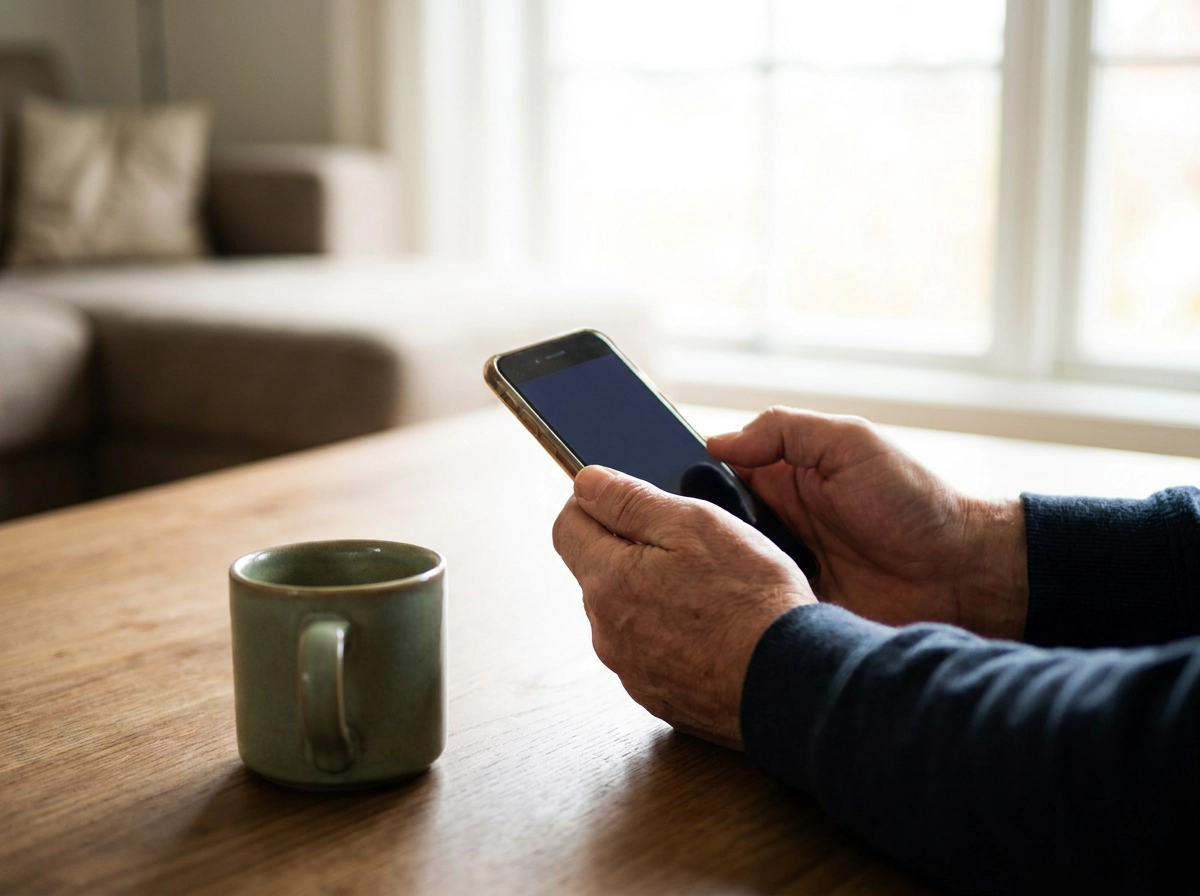
That gap is not about features. It is about presence. The difference between a sobriety day counter app and an AI companion app for quitting weed comes down to one question: is something there when your motivation is lowest and the craving is loudest? A counter shows you a number. A companion shows up.
If your counter is working, keep it. There is no reason to abandon a tool that is helping. But ask yourself honestly what you are relying on for the hard nights, when it is late and quiet and the number on the screen is not enough.
If you have reset more than once, and the pattern is always the same moment, late, alone, craving loud, that is not a willpower problem. That is a signal. You need a quit weed app that can actually meet you in that moment, not one that waits silently for you to open it.
Solenna was built for exactly that gap. It learns when your hard hours are and reaches out before they arrive. Text or voice, any hour, no judgment, and your full history intact. Join the waitlist at solenna.app and be first in when it opens.
09Conclusion
Sobriety counter apps do one thing well: they give you a number worth protecting. But numbers go quiet when cravings get loud, and that silence is where a lot of relapses happen.
The core takeaways are simple. Counters track progress; they do not provide presence. The hardest moments in quitting weed are not about data, they are about needing something to respond. AI companion apps fill the gap counters cannot reach. And the right tool is the one that meets you where your willpower actually breaks down, not where it is already holding.
If your counter is enough, keep it. If you have reset before and recognize the pattern, you need more than a number.
Join the Solenna waitlist at solenna.app before the next hard night arrives. Progress is worth tracking. Getting through is worth fighting for.
This is general information about quitting weed, not medical advice, and Solenna is not therapy or a crisis line. If you are in danger right now, contact your local emergency number.
The 2am version of this
Solenna is an AI companion for walking away from weed - there for the next hard hour, with your whole history already in the room. Text her or call her.
Get on the waitlist