Benefits of Quitting Weed: What Comes Back and When
What research says comes back after you quit weed, from your lungs to your memory to your sleep, and why the first weeks can feel worse before they feel better.
Contents10 parts · 11 min
- What Gets Harder Before It Gets Better
- Your Body on a Timeline: What Recovers and When
- What Happens With Your Lungs
- Your Brain Gets Its Sharpness Back
- Sleep Gets Worse First, Then Genuinely Better
- Mood and Mental Clarity Stabilize Over the First Month
- Why Recovery Does Not Feel Like a Straight Line
- What You Are Actually Getting Back
- What to Do With This Information
- Conclusion
So you've decided to quit weed. Maybe you're a few days in and wondering why you feel like absolute garbage instead of some glowing, refreshed version of yourself. Or maybe you're just thinking about quitting and want to know what you're actually signing up for before you commit.
Here's the honest truth: the quit weed benefits are real, but your body doesn't hand them over all at once. There's a timeline, and some parts of it are genuinely uncomfortable before they get good. Your sleep might get worse before it gets better. Your mood might dip before it lifts. And your brain needs a few weeks to shake off the fog and find its footing again.
But here's the thing. A lot of those changes are happening faster than you'd expect, and knowing what's going on inside your body makes the rough patches a lot easier to push through.
In this post, we're breaking down exactly what happens to your lungs, your brain, your sleep, and your mood when you stop smoking, and roughly when research says those changes show up.
01What Gets Harder Before It Gets Better
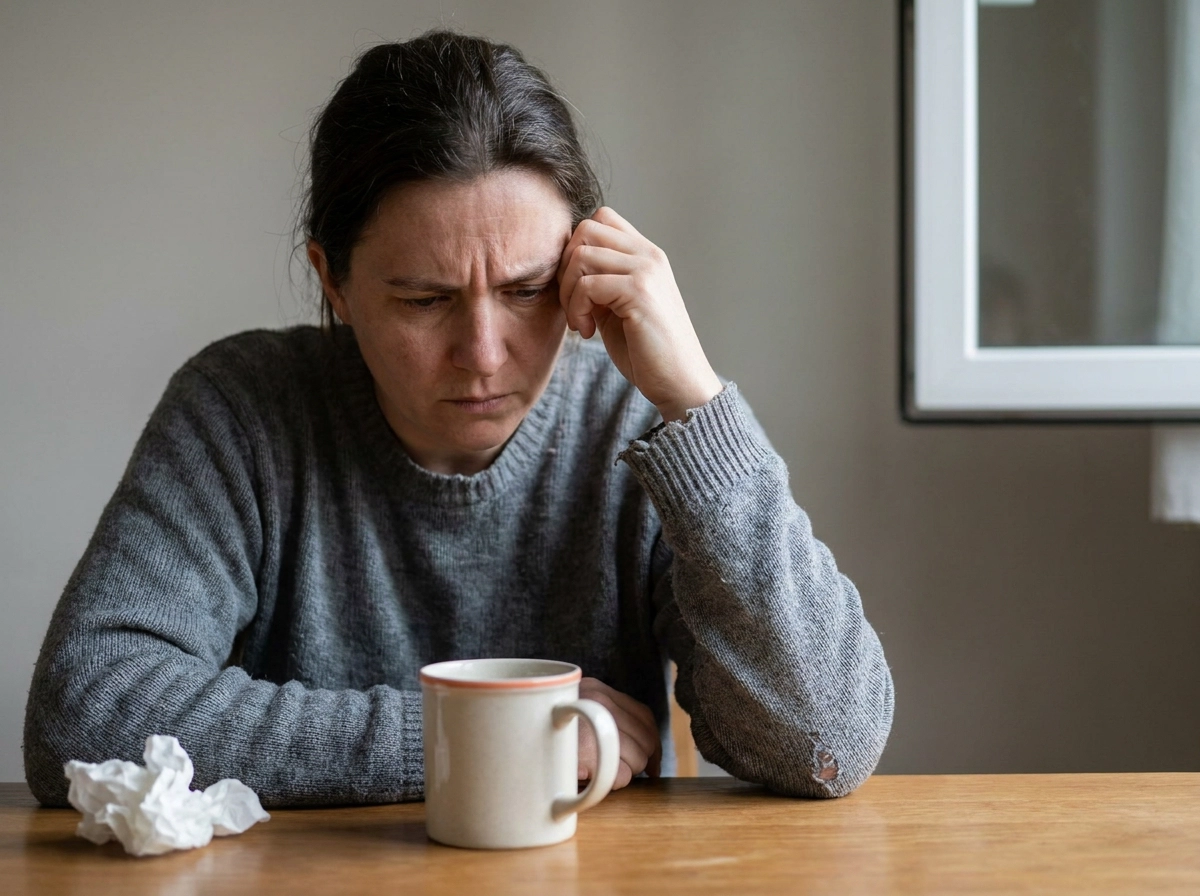
Before getting into what improves, you need to know what happens first. Because this is where most people quit quitting.
Within 24 to 48 hours of your last smoke, withdrawal kicks in. Irritability, anxiety, trouble sleeping, and a dropped appetite are the most common symptoms. They are also the most disruptive, arriving exactly when your motivation is freshest and doing their best to convince you this was a bad idea.
This is not a character flaw. Cannabis withdrawal is formally recognized in the DSM-5 as a documented clinical syndrome. What you feel on day two is real, measurable, and well-studied. Not weakness. Not overreaction.
A lot of people who have tried to quit before stopped here. Not because the benefits are not real, but because nobody told them this part was coming. They hit day two feeling worse than day zero, assumed something was wrong, and went back to fix it.
That is the gap this article is here to close.
Naming the hard part upfront is not meant to scare you off. It is expectation-setting. If you know day two is going to be rough, a rough day two does not feel like a sign you should stop. It feels like exactly what was supposed to happen, right on schedule.
Everything that follows covers what your body and brain get back once you move through this window.
02Your Body on a Timeline: What Recovers and When
Here's what the timeline actually looks like, broken down by what your body and brain are doing at each stage.
Timeframe | What research has found |
|---|---|
24 to 48 hours | Withdrawal usually starts: irritability, low appetite, trouble sleeping (Connor et al., 2022) |
Days 2 to 6 | Most withdrawal symptoms peak (same review) |
First week | In a study of 16- to 25-year-olds, memory and learning improved, mostly in the first week without weed (Schuster et al., 2018) |
2 to 3 weeks | In heavy users, some withdrawal symptoms can last this long or longer, and sleep problems may continue for several weeks (Connor et al., 2022) |
About 4 weeks | In daily smokers, brain cannabinoid (CB1) receptors that had dropped by about 20% were back to normal in most regions (Hirvonen et al.) |
1 month | In the same memory study, attention had not yet improved; it may take longer |
A few things worth flagging before you hit these stages unprepared.
Memory and focus don't recover on the same schedule. Most people expect a smooth, linear climb. That is not what the research shows. In the study above, recall improved within the first week, while attention hadn't caught up by the end of the month. Many people notice they feel sharper in some ways before others.
The sleep window is the one that catches people off guard. Sleep often gets worse before it improves, and sleep problems can continue for several weeks. THC suppresses REM sleep, and once it clears your system, the brain rebounds. Vivid dreams, fragmented nights, and the sense that quitting broke your sleep are common in this phase. It's covered in more depth in the sleep section below.
The four-week receptor finding is the part that matters most neurologically. It's not a metaphor for "feeling better." It's a measured change in the brain.
03What Happens With Your Lungs
The timeline above covers your brain. Your lungs are a separate story, and in some ways a more encouraging one.
Smoking a joint is harder on your airways than most people realize. Because cannabis smoke is typically inhaled deeper and held longer, and there's no filter, research links frequent cannabis smoking to chronic bronchitis symptoms including persistent cough, excess mucus, and wheezing.
Here's the part that matters: the same review reports that stopping cannabis leads to a significant improvement in respiratory symptoms, and that the airway inflammation cannabis causes may be largely reversible. The American Lung Association covers what's known about marijuana and lung health.
The cough and congestion are a response to ongoing smoke exposure. Stopping removes the exposure.
04Your Brain Gets Its Sharpness Back
The same logic that applies to your lungs applies to your brain: you are not gaining something new, you are getting back what regular use was quietly taking.
Here is the mechanism. THC binds to cannabinoid receptors throughout the brain. Use it frequently enough and your brain downregulates CB1 receptor density, essentially reducing the number of active docking sites to compensate for constant stimulation. The result is a brain running at a blunted baseline, less responsive, less sharp.
When you stop, that process can reverse. In the same study, daily smokers' receptor levels were back to normal in most brain regions after about four weeks without cannabis.
What research has found about thinking and memory:
First week: In a study of young regular users, memory and learning improved, mostly in the first week without cannabis.
First month: Attention hadn't improved by the end of that month. It may take longer, and researchers are still studying how long.
None of this is self-improvement. Regular use was suppressing these functions. Stopping removes that suppression. The sharpness was already yours.
05Sleep Gets Worse First, Then Genuinely Better
Cognition is the upside. Sleep is the ambush.
While your brain gets its sharpness back, your sleep is going to get noticeably worse before it gets better. This catches a lot of people off guard, and that surprise can send people straight back to it.
Here is what is happening. THC affects REM sleep, the restorative stage where your brain consolidates memory and actually recovers. Frequent users often sleep long hours but miss the sleep that counts. When you stop, the brain doesn't ease back in. It rebounds hard, flooding toward REM aggressively in a documented phenomenon called REM rebound. The result: vivid, often disturbing dreams, fragmented sleep, and waking up feeling worse than before you quit.
Withdrawal research documents this phase: sleep problems may continue for several weeks or longer, and many people find it one of the hardest parts of the first month.
The dangerous part is not the bad sleep. It is that nobody told you it was coming.
When sleep gets worse after quitting, the obvious explanation feels like the correct one: weed helped you sleep, so quitting broke something. A lot of people light up again to fix it. It works immediately. That becomes the story.
If you are on day 11 at 2am, staring at the ceiling with a brain that will not shut off, that is not relapse evidence. That is what REM rebound looks like. It's a known phase, not a sign you broke something. But knowing that in the moment is very different from reading it now.
That specific window, late night, early into the second week, no one to talk to, is exactly what Solenna was built for. Not day-one motivation. That moment.
06Mood and Mental Clarity Stabilize Over the First Month
Sleep isn't the only thing that gets rocky in the first few weeks. Mood takes its own bumpy ride.
Anxiety and irritability tend to spike hardest in the early withdrawal phase, roughly the first few days. That's not a character flaw; it's a documented, recognized withdrawal pattern. The DSM-5 formally classifies cannabis withdrawal as a clinical syndrome, which means what you're feeling has a name and a trajectory.
Here's why it happens. Your endocannabinoid system normally handles mood regulation on its own. When THC is doing that job regularly, your system gradually stops pulling its own weight. Take the THC away and your natural mood regulation is essentially out of practice, which is why those early days feel destabilizing.
Research suggests the system can recover: in daily smokers, cannabinoid receptor levels were back to normal in most brain regions after about four weeks. What comes back isn't some elevated new emotional state; it's your own baseline. People who quit often describe a quiet steadiness settling in, one they hadn't felt in a long time and had stopped expecting.
Mental fog can follow a similar curve. For many people, that slight sense of running a half-second behind their own thoughts lifts over the first weeks.
It can feel like remembering who you were before all of it.
07Why Recovery Does Not Feel Like a Straight Line
All of that mood stabilization happens on a curve, not a clock. And the curve has dips.
Recovery from regular cannabis use is not a straight line up. Some days at week two can feel worse than day one did. That is not a sign something went wrong. Some withdrawal symptoms, like low mood and anger, typically peak after about two weeks.
Sleep is the clearest example. The disruption doesn't always peak early and fade; it can last for weeks, right when many people expect to feel noticeably better. Someone on day 13 who is sleeping worse than the night before they quit is not failing. They are in a hard window.
Thinking and memory follow a staged pattern too: in the research above, memory improved first, while attention took longer. You may not feel sharp all at once.
This sequencing matters for one practical reason: knowing it in advance turns a hard day into data instead of a reason to quit quitting. Day 11 feeling brutal is not evidence the process is not working. It is evidence you are inside the documented hard window.
A day counter without that context leaves you with just a number. Knowing it is day 11 means nothing if you do not know day 11 sits inside the worst sleep stretch of the entire process.
08What You Are Actually Getting Back
So here is the frame that makes all of this land correctly.
Every improvement documented in this article, the sharper recall, the faster coordination, the steadier mood, the sleep that actually restores you, is not something new being added. It is something that was already there, running underneath, being suppressed. The changes researchers document are returns to your own baseline, not enhancements. You are not building a better version of yourself. You are removing what was slowing the original one down.
That distinction matters more than it might sound. If you have resisted the "addict getting better" narrative, good. That narrative is also inaccurate. You are not broken. You are not being fixed. You had a sharp memory, functional sleep, real coordination, and a mood that held on its own. Regular use suppressed those things. Quitting lets them come back.
The sharpness was yours. The memory was yours. The sleep you have not had in months was yours. None of this is aspirational. It is just what your brain and body do when the suppression lifts.
This is also why the non-linear recovery covered in the previous section makes sense. You are not building toward something unfamiliar. You are waiting for systems that already know how to work to come back online, on their own timeline, at their own pace.
09What to Do With This Information
Now you have the timeline. Here is how to actually use it.
Don't evaluate how you feel on day two. Mood tanks and appetite disappears in the first 48 hours. That is withdrawal doing exactly what it is documented to do, not a signal that quitting isn't working.
Expect sleep to get worse around week two, not better. This is the part most people aren't warned about. It's common, and it's one of the reasons people go back. Knowing it's coming is genuinely different from being blindsided by it.
Track context, not just a number. Day 11 is not the same as "day 11 in the worst sleep window of the entire process." The number alone tells you nothing useful. The number with context tells you you're in a hard stretch, and that it's a known one.
The hardest moments are predictable: late nights in the first two weeks, when sleep fails and there's nothing to do but sit with it. That's where a lot of slips happen. Not because the decision to quit was wrong, but because most tools aren't built for 2am on day 11.
Solenna is. She remembers where you are in the timeline, learns when your hard hours tend to hit, and reaches out before them instead of waiting for you to reach out after. You can text her or call her. Join the waitlist at solenna.app.
10Conclusion
Quitting weed is not a willpower problem. It is a biology problem, and biology runs on a timeline.
Research gives the rough shape: withdrawal in the first days, sleep that can get harder before it gets better, and brain chemistry that rebalances over weeks. None of this is linear, and none of it is random.
What that means practically: the worst moments are not signs you are failing. They are signs you are in the middle of something that has an end.
You now know roughly what the path looks like. That knowledge is not small. A lot of people quit without it.
Use the timeline. Track where you are in it. And when 2am on day 11 shows up, make sure something is already there waiting.
This is general information about quitting weed, not medical advice, and Solenna is not therapy or a crisis line. If you are in danger right now, contact your local emergency number.
The 2am version of this
Solenna is an AI companion for walking away from weed - there for the next hard hour, with your whole history already in the room. Text her or call her.
Get on the waitlist